본문 바로가기 주메뉴 바로가기
국회도서관 홈으로 정보검색 소장정보 검색

결과 내 검색

동의어 포함

목차보기


Foreword
Preface
1. The Evolving Landscape of Artificial Intelligence: Insights and Narratives
1.1 Introduction
1.1.1 Overview of the AI Landscape
1.1.2 Purpose and Scope of the Chapter
1.2 Historical Context of AI Development
1.2.1 Early Days of Artificial Intelligence
1.2.2 Key Milestones in AI Research
1.3 DeepMind: Inception and Acquisition
1.3.1 Founding of DeepMind
1.3.2 Google’s Acquisition and Its Conditions
1.3.3 Formation of OpenAI
1.3.4 Development and Impact of GPT-3
1.3.5 Competitive Dynamics in AI Development
1.3.6 Major Players and Their Strategies
1.3.7 Debates Over AI Ethics
1.3.8 Role of Ethics Boards and Oversight
1.3.9 AI and Job Displacement
1.3.10 Utopian vs. Dystopian Views
1.3.11 Representation of AI in Films and Literature
1.3.12 Key AI Technologies and Their Evolution
1.3.13 AI Development Across Different Countries
1.3.14 Emerging Trends in AI Research
1.3.15 Case Study: DeepMind’s AlphaGo
1.3.16 Governmental Policies on AI
1.4 Dramatic Moments and Key Discussions in AI’s Evolution
1.4.1 Secret Gatherings and Elite Meetings
1.4.2 Elon Musk and Larry Page: A Clash of Visions
1.4.3 The Backstage of AI Development
1.4.4 The Human Element in AI Evolution
1.5 Conclusion
1.5.1 Summary of Key Points
1.5.2 Future Research Directions
2. From Turing to Transformers: A Comprehensive Review and Tutorial on the Evolution and Applications of Generative Transformer Models
2.1 Introduction
2.1.1 Background and Significance of Generative Models in AI
2.1.2 The Rise of Transformer Architectures
2.1.3 Purpose and Structure of the Chapter
2.2 Historical Evolution
2.2.1 Turing Machines and the Foundations of Computation
2.2.2 Early Neural Networks and Language Models
2.2.3 The Advent of Transformers
2.2.4 Attention Mechanism: The Heart of Transformers
2.2.5 Generative Transformers and Their Significance
2.3 Tutorial on Generative Transformers
2.3.1 Basics of the Transformer Architecture
2.3.2 Building a Simple Generative Transformer
2.3.3 Advanced Techniques and Best Practices
2.4 Applications and Use Cases
2.4.1 Text Generation for Creative Writing
2.4.2 Chatbots and Conversational Agents
2.4.3 Code Generation and Programming Assistance
2.4.4 Other Notable Applications
2.5 Challenges and Limitations
2.5.1 Model Interpretability
2.5.2 Hallucination in Text Generation
2.5.3 Ethical Considerations in Text Generation
2.5.4 Computational Requirements and Environmental Impact
2.6 The Future of Generative Transformers
2.6.1 Multimodal models
2.6.2 Domain-Specific Models
2.6.3 Model Efficiency
2.6.4 Ethical AI
2.6.5 Interdisciplinary Integration
2.7 Conclusion
3. Ethical Considerations for AI
3.1 Bias and Fairness - Ethical Challenges of Biased Algorithms and Decision-making
3.1.1 Introduction
3.1.2 The Impacts of Algorithmic Bias
3.1.3 Towards Fairer and More Accountable Algorithms
3.1.4 Role of Ethics and Values like Justice and Non-discrimination
3.1.5 Outlook for Future Research and Policy Directions
3.2 Privacy and Surveillance: Balancing Individual Rights and Benefits of AI
3.2.1 Understanding Privacy Harms from AI Surveillance
3.2.2 Arguments for and Against AI Surveillance
3.2.3 Towards Solutions Balancing Privacy and Innovation
4. Artificial Intelligence Societal Impact and Seizing Opportunities
4.1 Income Inequality - The Potential for AI to Exacerbate Economic Disparities
4.1.1 Effects of on the Job Market
4.1.2 Gains from AI Adoption
4.1.3 Unequal Geographic Impact
4.1.4 Marginalization of Disadvantaged Groups
4.1.5 Policy Approaches to Ensure Inclusive Prosperity
4.2 Redefining Success - Shifting Cultural Norms and Values with Changing Work Dynamics
4.2.1 Rethinking Productivity and Performance
4.2.2 Changing Workplace Culture and Dynamics
4.2.3 AI as an Opportunity to Improve Society
4.3 Embracing Change & Envisioning the Future - Strategies for Individuals and Organisations & Positive Vision of AI-driven Workplace
4.3.1 Adapting to the Future of Work as Individuals
4.3.2 Opportunities for Business Leaders
4.3.3 Strategies for Policymakers
4.3.4 Positive Vision for Human-AI Collaboration
5. Ontroduction to the Future of Work with AI
5.1 Historical Evolution of Work and Technology
5.1.1 Defining the AI-Driven Workplace
5.1.2 Impact on Professional and Personal Interactions
5.2 Digitization of Media and Information Dissemination
5.2.1 AI in News and Entertainment Industries
5.2.2 Implications for Knowledge Sharing in the Workplace
5.3 AI's Role in Creating the AI-Enabled Leisure Society
5.3.1 Concept and Realization of Increased Leisure Time
5.3.2 Economic and Societal Implications
5.4 The Emergence of AI in the Sharing Economy
5.4.1 Transforming Traditional Economic Models with AI
5.4.2 Case Studies: AI-Driven Sharing Platforms
5.5 AI, Robotics, and Automation in the Workplace
5.5.1 Sector-Specific Transformations
5.5.2 Human-AI Collaboration and New Job Roles
5.6 Technological Unemployment and Job Displacement
5.6.1 Assessing the Risks and Opportunities
5.6.2 Strategies for Workforce Transition
5.7 Education and Skill Development in an AI Era
5.7.1 Adapting Educational Systems for AI Integration
5.7.2 Lifelong Learning and Reskilling Initiatives
5.7.3 AI Fairness and Bias
5.7.4 Privacy and Data Security Concerns
5.8 The Digital Divide and Inclusivity in the AI Workplace
5.8.1 Addressing Inequalities in Access and Skills
5.8.2 Policies for Inclusive AI Development
5.9 Regulating AI in the Work Environment
5.9.1 National and International Policy Frameworks
5.9.2 Best Practices for AI Governance in Organizations
5.10 AI and the Global Economy
5.10.1 AI's Impact on Global Economic Structures
5.10.2 International Collaboration and Competition
5.11 Innovations in AI and Future Work Trends
5.11.1 Emerging Technologies Shaping the Future of Work
5.12 Predictions and Scenarios for the Next Fifty Years
5.12.1 Long-Term Forecasts in the AI-Driven Future
5.13 Case Studies: Successful AI Integration in Various Industries
5.13.1 Healthcare
5.13.2 Manufacturing
5.13.3 Service Industry
5.14 Conclusion and Future Outlook
5.14.1 Summarizing the Transformative Power of AI
5.14.2 Envisioning the Future of Work and Society
6. Effective Accelerationism and the Future of Artificial Intelligence: Navigating Ethical, Technological, and Societal Implications
6.1 Introduction to Effective Accelerationism
6.1.1 Historical Context and Emergence in the Tech Community
6.1.2 The Role of AI in Shaping the e/acc Ideology
6.2 Philosophical Underpinnings of Effective Accelerationism
6.2.1 Exploration of the Philosophical Roots of e/acc
6.2.2 Comparison with Related Movements and Ideologies
6.2.3 Analysis of the Core Beliefs Driving e/acc Advocates
6.3 Technological Innovation and Market Forces in e/acc
6.3.1 The Role of Capitalism and Market Dynamics in e/acc
6.3.2 Case Studies of Technological Advancements Inspired by e/acc
6.3.3 Discussion of Technocapital as a Driving Force
6.4 Silicon Valley and the Adoption of e/acc
6.4.1 How Silicon Valley Leaders and Companies have Embraced e/acc
6.4.2 The Influence of e/acc on Tech Culture and Business Strategies
6.4.3 Profiles of Key Figures and Companies Aligned with e/acc
6.5 AI Development Under the Lens of e/acc
6.5.1 The impact of e/acc on AI research and development
6.5.2 Potential Benefits and Risks of Accelerated AI Advancement
6.5.3 Case Studies of AI Projects Influenced by e/acc Principles
6.6 Ethical Considerations and Criticisms of e/acc
6.6.1 Ethical Dilemmas Posed by the e/acc Approach to Technology
6.6.2 Critiques from various Scholars, Ethicists, and Tech Experts
6.6.3 Balancing Technological Progress with Ethical Responsibility
6.7 Societal Implications of e/acc
6.7.1 The Potential Societal Impact of Unchecked Technological Acceleration
6.7.2 The Role of e/acc in Shaping Future Social and Economic Structures
6.7.3 Analysis of Potential Future Scenarios Under e/acc Influence
6.8 Regulatory and Policy Perspectives on e/acc
6.8.1 The Role of Government and Regulation in an e/accdriven World
6.8.2 Policy Challenges and Responses to Rapid Technological Advancement
6.8.3 International Perspectives on e/acc and AI Governance
6.8.4 Predictions for the Future Trajectory of e/acc and AI
6.8.5 Emerging Trends and Potential Shifts in the e/acc Movement
6.8.6 Summarizing the Key Findings and Insights from the Chapter
6.8.7 Recommendations for Stakeholders in Technology, Policy, and Ethics
6.8.8 Recommendations for Stakeholders in Technology, Policy, and Ethics
6.8.9 Final Thoughts on the Future Coexistence of Humanity and AI under e/acc
7. Real World Applications—Artificial Intelligence in the Battle Against COVID-19: A Comprehensive Review
7.1 Introduction
7.1.1 Background
7.1.2 Rationale
7.1.3 Objectives
7.2 Scope and Limitations
7.2.1 Ethical Considerations
7.2.2 Technological Constraints
7.3 Organization of the Chapter
7.4 Methodology
7.4.1 Literature Search Strategy
7.4.2 Inclusion and Exclusion Criteria
7.4.3 Data Extraction and Analysis
7.5 Evolution of AI in Healthcare
7.5.1 Rule-based Expert Systems
7.5.2 Integration of Machine Learning
7.5.3 AI in Genomics and Drug Discovery
7.5.4 AI-Enabled Medical Devices and Wearables
7.5.5 The Role of AI in Pandemic Response
7.6 AI in COVID-19 Detection and Diagnosis
7.6.1 Imaging Techniques
7.6.2 Natural Language Processing in Symptom Assessment
7.6.3 Wearable Technologies
7.7 AI in COVID-19 Treatment and Management
7.7.1 Drug Discovery
7.7.2 Patient Management and Monitoring
7.7.3 Telemedicine
7.8 AI in COVID-19 Prediction and Analytics
7.8.1 Epidemiological Modeling
7.8.2 Resource Allocation
7.8.3 Social Media and Sentiment Analysis
7.9 Ethical and Societal Implications
7.9.1 Data Privacy
7.9.2 Algorithmic Bias
7.9.3 Accessibility and Inequality
7.10 Case Studies
7.10.1 Country-Specific Implementations
7.10.2 Success Stories and Failures
7.11 Future Directions
7.11.1 Emerging Technologies
7.11.2 Policy Recommendations
7.12 Conclusion
8. Intelligence Revolution—The Beginning of the End
8.1 Introduction
8.1.1 Overview of the Intelligence Revolution
8.2 The Revolutions that Advanced Humanity
8.2.1 Pre-Agricultural Era
8.2.2 The Era of Agricultural Revolution
8.2.3 Social Revolution—The Transition from Agricultural Society to the Industrial Revolution
8.2.4 The Industrial Revolution
8.2.5 First Industrial Revolution (1600AD Onwards)
8.2.6 Second Industrial Revolution (1870AD Onwards)
8.2.7 Third Industrial Revolution (1970AD Onwards)
8.2.8 Fourth Industrial Revolution (2000AD Onwards)
8.2.9 Fifth Industrial Revolution (2020AD Onwards)
8.2.10 Intelligence Revolution (2023AD Onwards)
8.3 Intelligence Revolution 1.0
8.3.1 Human-Machine Collaboration: The Mantra to Win with AI in the Era of the Intelligence Revolution
8.3.2 Human Intelligence
8.3.3 Digital Intelligence
8.3.4 Artificial Intelligence
8.3.5 Future Casting Humanity with Intelligence Revolution–Imaging Beyond 2030
8.3.6 Evolution of the Human Body: Transhumanism
8.3.7 Humanity in 2030–Everyday Life
8.3.8 Humanity in 2030–Corporate World
8.3.9 Humanity in 2030–Government World
8.4 The Velocity of Intelligence Revolution: Catching up is not an Option
8.4.1 Role of AI in the Intelligence Revolution
8.5 Future of Work: Human Intelligence in the Age of Intelligence Revolution
8.5.1 Emerging Trends in the Future of Work
8.5.2 Automation to Autonomous: Reimagine Roles
8.5.3 Rise of the Hybrid Workforce and Workplace
8.6 Conclusion
8.6.1 Revolutions that has Advanced Humanity
8.6.2 Intelligence Revolution 1.0
8.6.3 Imaging Beyond 2030
8.6.4 Focus on the Velocity
8.6.5 Role of Artificial Intelligence
8.6.6 Future of Workforce and Workplace
Bibliography
Index
Epilogue

이용현황보기

The rise of machines : future of work in the age of AI 이용현황 표 - 등록번호, 청구기호, 권별정보, 자료실, 이용여부로 구성 되어있습니다.
등록번호 청구기호 권별정보 자료실 이용여부
0003183205 331.2 -A25-2 서울관 사회과학자료실(208호) 이용가능

출판사 책소개

알라딘제공

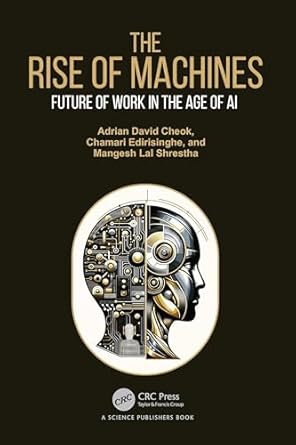
This book provides an in-depth look at the impact of artificial intelligence (AI) on the future of work. The rise of AI and automation is transforming the world of work, and the book explores the implications of this transformation on jobs and skills. It begins by introducing readers to the basics of AI technology and its various applications in the workplace. It then moves on to examine the impact of AI on jobs and skills, including the changing nature of work and the potential for job loss due to automation. It also delves into the ethical implications of AI in the workplace, including the moral and ethical questions that arise when AI is used to make decisions that affect people's lives.

Besides exploring the impact of AI on the workforce, the book provides practical advice for preparing for the future of work in the age of AI. This includes the importance of reskilling and upskilling, as well as strategies for adapting to the changing world of work in the age of AI. It concludes with a future outlook, exploring the likely direction of the workforce in the years to come and the importance of preparing for the future with a proactive approach to AI and the workforce. This book provides a comprehensive and accessible look at the impact of AI on the future of work. It is ideal for anyone interested in understanding the implications of AI on the workforce and preparing for the future of work in the age of AI.


This comprehensive guide?explores?the transformative impact of AI on?future of?work?and the?workplace.?It?delves?into?Intelligence Revolution that?AI technology?is evolving, its applications?and?impact?on jobs, skills?and future economy.