본문 바로가기 주메뉴 바로가기
국회도서관 홈으로 정보검색 소장정보 검색

결과 내 검색

동의어 포함

목차보기


1 Introduction 1
1.1 Aim and the Scope of the Research 1
1.2 Methodology and the Structure of the Research 5
1.2.1 Comparative Legal Methodology 5
1.2.2 Interdisciplinary Methodology 6
1.2.3 Structure of the Research 7
References 8
2 The Mistake Doctrine in German and English Contract Law 11
2.1 Historical Development of the Mistake Doctrine 12
2.1.1 Ancient Roman Law 13
2.1.2 Post-medieval Roman Law 15
2.1.3 Common Law Treatise Writers on Mistake Doctrine 20
2.2 Intention as a Prerequisite for an Effective Contract in
German and English Law 23
2.2.1 Declaration of Intent in German Law 24
2.2.2 Contractual Intent in English Law 27
2.3 Contractual Mistake Doctrine in German and English Law 30
2.3.1 Mistake Doctrine in German Law 31
2.3.2 Mistake Doctrine in English Law 47
2.3.3 General Mistake Categories Based on the
Characteristics of a Mistake 60
2.4 Interim Conclusion 63
References 65
3 A Psychological Approach to Contractual Mistakes 69
3.1 Zitelmann’s Psychological Mistake Doctrine 71
3.1.1 Perceptions and “Series of Actions” at the Centre of
Zitelmann’s Analysis 73
3.1.2 Classification of Mistakes Based on Faulty Perceptions 76
3.1.3 The Relevance of Zitelmann’s Classification in Law .... 78
3.2 The Psychological Basis of Zitelmann’s Doctrine 81
3.2.1 Theories on Human Decision-Making vs Zitelmann’s
“Series of Actions” 82
3.2.2 Faulty Perceptions vs Human Error: The Criteria
for Mistake Classification 96
3.3 Interim Conclusion 109
References 111
4 Technical Overview of AI and Its Participation in the
Contract Formation 115
4.1 Technical Overview of AI 117
4.1.1 Defining AI 118
4.1.2 Machine Learning Approaches 123
4.1.3 AI Decision-making Process and Error Taxonomy 129
4.2 Legal Foundations of AI’s Participation in the Contract
Formation 137
4.2.1 AI’s Intention to Contract 139
4.2.2 General Rules of Attribution of AI’s Communications
to its User 152
4.2.3 Applicability of Agency Relations to AI Contracting 158
4.2.4 Document Signed in Blank as a Hybrid Contract
Formation Process 167
4.3 Interim Conclusion 173
References 175
5 AI-made Mistakes in the Contract Formation 187
5.1 Human and Contracting AI: Decision-making Process
and Errors 189
5.1.1 Contracting AI 189
5.1.2 Decision-making Process of Human
and Contracting AI 192
5.1.3 Errors Occurring During the Decision-making
Process of Humans and Contracting AI 195
5.2 Framework for AI-made Mistakes in the Ccontract
Formation 200
5.2.1 Legal Attribution Mechanism Enabling the
Framework 201
5.2.2 The Framework for AI-made Mistakes 202
5.2.3 The Role of xAI Techniques in Enabling
the Framework 206
5.3 Interim Conclusion 207
References 208
6 Conclusion and Outlook 211

이용현황보기

A framework for AI-made mistakes in German and English contract law : a legal, psychological and technical inquiry 이용현황 표 - 등록번호, 청구기호, 권별정보, 자료실, 이용여부로 구성 되어있습니다.
등록번호 청구기호 권별정보 자료실 이용여부
0003187495 LM 346.43022 -A25-4 서울관 법률정보센터(206호) 이용가능

출판사 책소개

알라딘제공

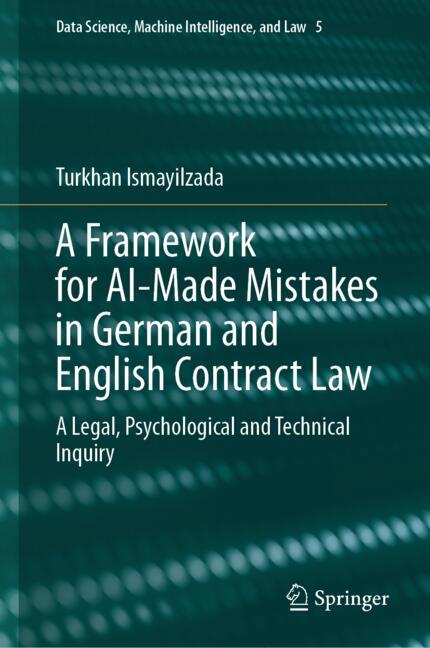
This book tries to answer the question "What happens if an AI system makes a mistake while contracting?" by applying an interdisciplinary and comparative legal methodology. It offers a tantalizing glimpse into the intricate web of legal, psychological, and technical phenomena involved, and how they are interconnected within the realm of contractual mistake doctrine as we know it today.?
It covers a wide range of topics, including the common origins of German and English contract law, the pivotal role of intentions as a prerequisite for effectual contracts in both jurisdictions, the classification of and psychological approach to contractual mistakes, and the complexities of AI's participation in contract law. Particular attention is paid to the juxtaposition of human- and AI-made mistakes from the perspective of information processing. As a result, the book offers a jurisdiction-agnostic framework for AI-made contractual mistakes that can aid legislators and policymakers in their deliberations on the regulation of AI in contract law. The framework considers cultural and historical differences between German and English contract law, and thus proposes an approach that can fit both (and potentially other similar)?jurisdictions with minor adjustments.?
In addition to these novel discussions, the work explores the views of prominent scholars and international experts in the field. As such, it will appeal to researchers and scholars in the fields of law, technology, psychology, and (especially) Artificial Intelligence. By presenting "a framework for AI-made mistakes in German and English contract law," Dr. Ismayilzada offers a valuable contribution to the field, inviting readers to explore the uncharted territory of AI and the law. Join the author on this intellectual journey and gain insights that will redefine your perception of contracts in the age of AI.